Supported by:

A group of farmers are trialing sisal string for binding their round bales to test the feasibility of sisal as a plastic free alternative. This field lab hopes to set the scene for bringing a forgotten but more sustainable product back to UK farming.
This trial has been conceptualised by a farming group in Cornwall, many of whom are organic. They have been joined by other farmers across the UK. All are motivated by the aim of reducing plastic use/waste and from concerns around livestock ingestion of plastic.
This field lab will help farmers access the product, use correct agricultural machinery (string round baling), and will work with farmers to research the feed quality and farm operational impacts of a switch to sisal bound bales. The trial will also include careful consideration of baling costs associated with switching to sisal. This trial will help fill current knowledge gaps in the industry around sisal feasibility, primarily about the operational implications of its use for winter feeding, especially considering its integrity when used for round bales.
For updates, reports and the timeline, please click on the brown banner above.
2,500 sisal twine wrapped bales are to be made and matched to an additional 2,500 bales using the farmers’ normal baling procedure. These are to be the trial bales from which samples and management observations are taken. The primary forage and bale for the trial is round hay bales as we believe these to have the most use in the industry but have the most questions that need answering. Some trialists are also entering haylage and straw into the trial.
Once the bales have been made and moved to storage, they will be stored separately under the same conditions.
Each final week of the month (during the feeding period) the farmers will be asked to fill out a questionnaire, which will gather information on breakages and bale manipulation, deterioration of forage, dry matter and water ingress, ease of use, speed of operation and the observed benefit of having a biologically derived product.
In late November, early March and then again in November 2025 forage samples will be taken which will be assessed in the lab for dry matter content, crude protein and sugar content. This will give an indication of forage depreciation which may be attributed to sisal twine wrapping.

One of the strengths of this farmer-led approach is that the farmers are very pragmatically “having a go” with sisal

In this field lab, five farmers trialled the use of sisal for binding round bales, to test it's feasibility as a plastic-free alternative. Findings show that sisal performed comparably to plastic twine where bales were stored in dry conditions. However, cost and access to suitable balers were identified as key barriers to wider uptake. Read the full report below:
In this webinar, two innovative farmers and two policy experts share farmers’ practical experiences from trialling reduced plastic in their farming systems, set against the policy and wider global context of plastic in farming.
Stuart Oates is an organic farmer in Cornwall, and founder of the Fossil Free Farm Project. He talks about what he's learned trialling sisal twine instead of plastic for tying hay bales in his field lab. He will touch on the practicality of using sisal, costs, impacts on forage handling and storage, plans for the future and his work on fossil free farming in general, and why it is important. A key outcome of this work is to support shared learning and build a community of practice focused on reducing plastic use in agriculture.
Rosie Begg, a blackcurrant grower in Norfolk, discusses her experiences trialling plastic free mulches and living mulches in blackcurrants as part of two Innovative Farmers field labs she's been involved with.
Joe Yates, Co-director of the Agriculture, Nutrition & Health Academy, addresses the wider global context of plastic in farming, drawing on his research on plastics in food systems.
Finally, Maddy Potter-Wood, Farming and Land Use Policy Officer at the Soil Association, explains the UK policy situation.
Sisal bales are inside and being used for winter feeding, so far no reports of any adverse impacts to quality of ability to handle. Forage samples to be taken within the next fortnight.
It's possible that Stuart Oates may have had enough of baling for the season, as he completes the last of the 3,000 trial bales!
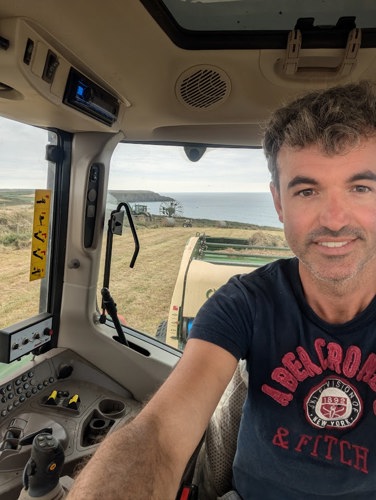
The bales, both sisal tied and plastic netted, will go into storage for the winter where the group can monitor their ability to withstand transport and vermin attack. The forage quality will be sampled in the spring.

June 2024
July 2024
August 2024
October 2024
November 2024
March 2025
April 2025
July 2025
November 2025
March 2026
Cornwall Wildlife Trust
Cornwall
Conor works as an advisor at Cornwall Wildlife Trust

Rosuick Farm
South Cornwall


