Overview
Our recent field lab on natural approaches to flystrike in sheep investigated whether farmers can reduce the use of chemical treatment for flystrike. Triallists used a risk-based approach to prevention and treatment rather than a solely chemical approach. The trial took place across five farms using an array of different remedies and herbal fly repellents, as well as conventional chemical fly sprays when necessary. The trials found that risk was strongly influenced by stock condition and environment, and that natural treatments were generally effective at treating active strike.
Due to demand we are continuing and expanding this research through the Integrated Pest Management Learning Network.
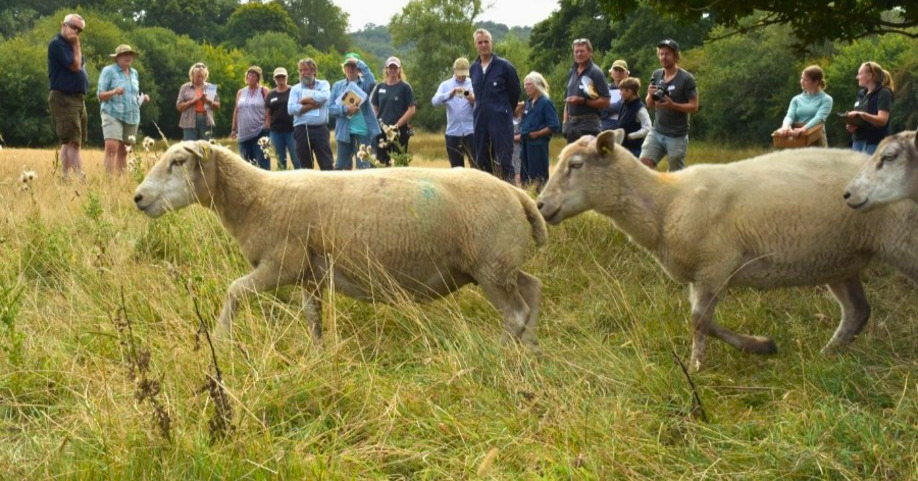

Natural approaches to flystrike can form the first lines of defence for sheep in the UK. A sliding scale approach from watch and wait through remedies and herbal products up to chemical products is in line with the new British Veterinary Association’s July 25 statement on ectoparasiticides and can help protect people and the planet. What is used should be dependent on risk level and vitality of livestock and aim to do least harm.

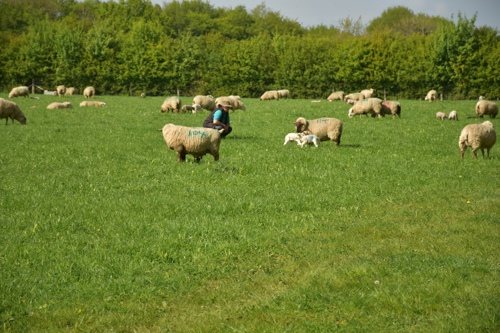
Why is it important to move away from whole-flock treatment?
Blowfly strike is a serious and costly sheep health issue caused by blowfly larvae (maggots) feeding on sheep flesh. Conventional control often relies on routine whole-flock chemical treatments, which can have adverse impacts on human and livestock health, soil biology and waterways. Use of natural preventative sprays remains limited in the UK due to a lack of knowledge and their shorter duration of protection. This field lab explored a more targeted, holistic approach to flystrike management, combining prevention, monitoring and treatment based on risk, and reflects growing interest in integrated pest management (IPM) for livestock.
Natural approaches to flystrike trial design
Five sheep farms in East Sussex tested a three-stage, graduated approach to flystrike control over one season. Farmers recorded flystrike status and stage of protocol they were at in the field.
-
Stage 1 (prevention): Helios Fly Strike Combi (homeopathic preparation) added to water troughs
-
Stage 2 (risk increased): once flies and strike were present or the risk level increased, there was a comparison of two natural spray products, Oxylis and BFR, and the farm’s usual chemical treatment
-
Stage 3 (treatment): comparison of three treatments on the presence of eggs and hatched maggots: tea tree oil mix, blow fly repel and the farms conventional product.
Farmers recorded observations in real time, tracking risk factors (weather, stock condition, field conditions), product use and outcomes. The trial focused on practical on-farm decision making and user experience.
Costs and factors to consider when choosing natural treatment
The trial developed a decision framework to support on-farm choices based on three areas:
-
Livestock vitality: e.g. dirty fleece, worms, recent cases
-
Environment: e.g. weather, flies present, field conditions
-
Practicalities: e.g. labour, handling access
Each factor was scored to decide whether to monitor, apply preventative treatments or intervene more actively. The graduated approach worked in practice and was adopted by all trial farmers. Some groups remained on preventative homeopathic treatments alone with no cases of flystrike, but most groups moved onto natural sprays as risk increased, with chemical treatments used on two groups. There was also less stress from all fly species with Helios fly strike combi.
We saw that natural treatments were effective at treating active strike, driving out and killing maggots and helping prevent re-infestation. However, their duration of protection was shorter, typically requiring reapplication every 3-4 weeks. In the end, chemical treatments which require withdrawal periods, PPE requirements and environmental impacts, were largely avoided.
It was also found the risk was strongly influenced by stock condition and environment. Factors like dirty fleece, worm burden, foot issues, weather conditions and field type all affected susceptibility. This approach means that farmers had to respond quickly for a more targeted and effective management, requiring more nimble approach than whole-flock chemical treatment.
Go with a graduated-scale approach
Findings from the field lab suggest that a graduated-scale prevention approach, used alongside a farm's normal shearing routine, can support groups of sheep to go through the season without the need for chemical input. Decision-support tools can help guide timing and choice of treatment.
Find out more about the field lab
Full details of the trial are available online here, including the final report, trial design, and the decision framework.
Join our IPM Learning Network!
This research is continuing through our Integrated Pest Management Learning Network, exploring practical, lower-input approaches and shared learning between farmers. If you’re interested in becoming a part of the network, visit Integrated Pest Management Learning Network.
Table of conventional and holistic product options for parasite control management
Product |
Safe to sheer |
PPE needed? |
Envt'l impact |
Meat withdraw (days) |
Price & source |
| Helios Fly Combo 30C | No shear restriction | No | Low toxicity; minimal environmental impact |
0 | aprox 5p per water trough dose for each field of sheep (weekly doses recommended) /£23.00 50 ml bottle |
| Blowfly Repel | No shear restriction | No | Low toxicity; minimal environmental impact |
0 | £172.50 (5L) |
| Tea Tree Oil Mix | No shear restriction | No | Low toxicity; minimal environmental impact |
0 | £88.00 -944mill v5 plus 15 mill tea tree |
| Oxylis | No shear restriction | No | Low toxicity; minimal environmental impact |
0 | £74.14 (2.5L) |
| CLiK | Do not shear for 3 months | Yes | The product is harmful to dung flies and poses a serious risk to aquatic life; treated sheep must be kept away from watercourses for at least one hour after treatment. |
40 | £129.95 (2.2L) |
| CLiK EXTRA | Do not shear for 3 months | Yes | Treated sheep must be kept away from watercourses for at least one hour after treatment to prevent serious risk to aquatic life. |
40 | £139.00 (2.2L) |
| CLiKZiN | Do not shear for 3 months | Yes | Treated sheep must be kept away from watercourses for at least one hour after treatment to avoid serious risk to aquatic life. |
7 | £99.50 (2.2L) |
| Crovect | Do not shear for 3 months | Yes | As a precaution, treated sheep must be kept away from watercourses for at least one hour following treatment. |
8 | £75.95 (2.2L) |
| Dectospot 10 mg/ml | Do not shear for 3 months | Yes | Deltamethrin is very toxic to dung fauna, aquatic organisms and honey bees, persists in soils and may accumulate in sediments; risk is reduced by limiting repeated use and keeping treated sheep out of watercourses for at least one hour after treatment. |
35 | £169.00 (2.5L) |
| Deltanil (cattle & sheep | Do not shear for 3 months | Yes | Deltamethrin is very toxic to dung fauna, aquatic organisms and honey bees, persists in soils and may accumulate in sediments; risk is reduced by limiting repeated use and keeping treated sheep out of watercourses for at least one hour after treatment. |
35 | £135.00 (2.5L) |
| Dysect | Not able to obtain information |
Yes | Not able to obtain information |
Not able to obtain information |
|
| Ectofly 12.5 mg/ml (includes molecto) | Do not shear for 3 months | Yes | Cypermethrin is extremely toxic to aquatic and dung organisms; keep treated sheep away from watercourses for at least 12 hours; limit use to one treatment per year per pasture, and avoid repeated treatments to prevent long-term effects on dung insects. |
8 | £50.50 (2.5 L) |
| Fly & lice spot-on | Do not shear for 3 months | Yes | Dangerous to fish and other aquatic life. Do not contaminate ponds, waterways or ditches with the product or used container. |
35 | £49.71 (500ml) |
Click here to look at the full product results table